The 6 Best Sensory Compression Bed Sheets & Lycra Bed Tunnels for Kids: An OT Review (2026)
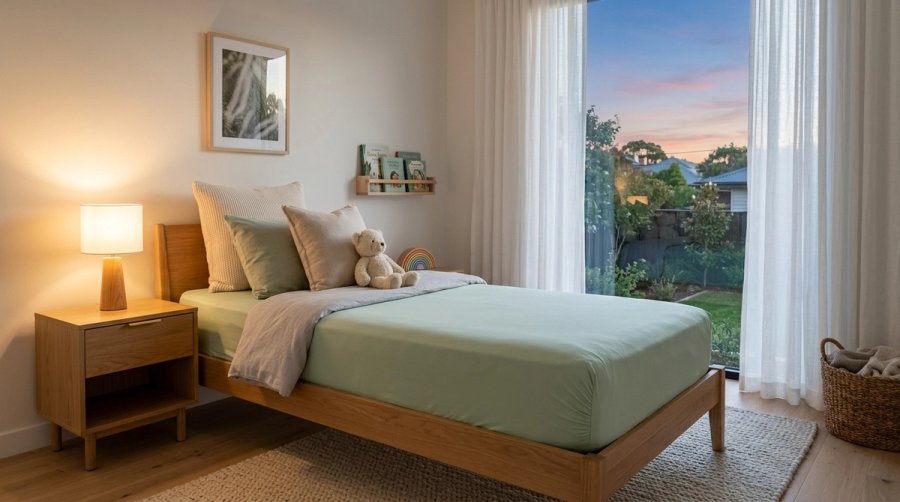
Editorial Disclosure & Medical Scope: Sensory Kids Books shares neurodiversity-affirming, lived-experience insights and sensory-informed tools for parents, caregivers, and educators. This publication is for educational purposes only and does not constitute formal medical diagnosis, psychiatric evaluation, or clinical occupational therapy advice. Always consult a qualified pediatrician or licensed clinician for individual medical care. As an Amazon Associate, we earn from qualifying purchases through our independent affiliate links at zero extra cost to you.
If bedtime in your home feels like an Olympic wrestling match against restless legs, sensory overload, and endless requests for "one more cup of water," you are not alone. For children with autism, ADHD, and Sensory Processing Disorder (SPD), lying still in a traditional bed can trigger profound neurological distress. When their bodies cannot feel where they end and the mattress begins—a core deficit in proprioceptive body awareness—their nervous systems stay stuck in hyper-vigilant sympathetic arousal.
For years, pediatric occupational therapists recommended weighted blankets. But as thousands of parents quickly discover, weighted blankets have major clinical flaws: children who roll kick them onto the floor within twenty minutes, and hot sleepers wake up drenched in sweat, triggering midnight sensory meltdowns. Enter sensory compression bed sheets and Lycra sleep sleeves.
A sensory compression sheet works like an elastic hug wrapped completely around the mattress. Utilizing four-way stretch nylon and spandex, it provides continuous, calming Deep Touch Pressure (DTP) without trapping heat or shifting off the bed. Below, we provide an architectural and clinical engineering breakdown of the 6 best sensory compression bed sheets and Lycra sleep tunnels available in 2026.
Architectural & Clinical Comparison: The 6 Best Sensory Compression Sheets (2026)
Side-by-side engineering specifications, 4-way elastic tension ratings, breathability scores, mattress depth compatibility, and clinical target profiles to help you end bedtime sensory battles.
| Product & Model | Size & Mattress Fit | Fabric Blend & Elasticity | Breathability & Heat Rating | Est. Price | Action |
|---|---|---|---|---|---|
Harkla Sensory Compression Bed Sheet Best Overall Sensory Sheet | Twin & Full Sizes • Deep Envelope Sleeve (Fits standard 8"–14" mattresses) | 80% Nylon, 20% Spandex • 4-Way Medical-Grade Elastic Stretch & Double-Hemmed Seams | Cooling Micro-Weave • High Airflow (Zero nocturnal heat-trapping) | ~$39–$49 | shopping_cartCheck Price |
Special Supplies Breathable Sensory Bed Sheet Best Value / Everyday Pick | Toddler, Twin, Full & Queen • Pull-Over Envelope Fit (Fits up to 12" depth) | 85% Breathable Nylon, 15% Spandex • Responsive Moderate Deep Touch Resistance | Lightweight Mesh Weave • Highly Breathable for Hot Sleepers | ~$29–$37 | shopping_cartCheck Price |
Hug Sleep "Sleep Pod Move" Wearable Pod Best Wearable / Travel Pod | Body-Contoured Pod (Small, Medium, Large) • Compatible with Bunk Beds & Daybeds | Patented 4-Way Stretch Modal Poly-Spandex • 360° Uniform Gentle Compression Swaddle | Specialized Breathable Modal Weave • Foot-Opening Slit for Instant Thermoregulation | ~$89–$99 | shopping_cartCheck Price |
Savoiz Heavy-Duty Sensory Compression Sheet Best Heavy-Duty Elasticity | Twin & Full • Snug Tension Fit for Active Kickers (Standard 8"–11" depth) | Ultra-Durable Reinforced Spandex Blend • High Resistance for Deep Proprioceptive Seekers | Moisture-Wicking Knit • Moderate Heat Dissipation with Reinforced Corners | ~$34–$42 | shopping_cartCheck Price |
CalmWear Dual-Ended Sensory Compression Bed Tunnel Best Open-Ended Tunnel | Twin Mattress Band (48" x 36" Lycra Sleeve) • Open Top & Bottom for Crawling Through | Therapeutic Lycra & Elastane • Heavy-Work Sensory Resistance for Bedtime Transition | Ultra-Thin Athletic Lycra • Zero Heat Trapping & Rapid Air Exchange | ~$45–$55 | shopping_cartCheck Price |
Cozy Snuggle Sack Sensory Bed Sleeve Best for Sensitive Skin | Toddler & Twin Sizes • Elasticated Easy-Slide Hem (Fits 6"–10" mattresses) | Hypoallergenic Bamboo-Spandex Blend • Gentle Sensory Compression & Frictionless Hand Feel | Naturally Thermoregulating Bamboo • Superior Cooling for Tactile Sensitivity | ~$24–$30 | shopping_cartCheck Price |
1. Harkla Sensory Compression Bed Sheet: The Clinical Gold Standard

• Official Badge: Best Overall Sensory Sheet
• Est. Price: ~$39–$49
• Mattress Fit: Twin & Full (Fits standard 8"–14" depth)
• Fabric Blend: 80% Nylon, 20% Spandex (Medical-Grade 4-Way Stretch)
• Best For: Daily bedtime sensory diets, active kickers, and children with ADHD or autism transitioning off heavy blankets.
shopping_cart👉 Check Current Price on Amazon (paid link)open_in_new
When evaluating sensory equipment from an engineering perspective, elasticity memory is the number-one failure point. Cheap spandex sheets stretch out after three washes, leaving a loose, baggy mess that offers zero sensory resistance. Harkla engineered their compression sheet specifically to solve this problem, utilizing an 80/20 nylon-spandex weave that maintains over 95% of its elastic snap even after months of machine washing.
The Harkla sheet slips over a standard twin or full mattress like a giant pillowcase, leaving the head and shoulders free while wrapping the torso and legs in uniform, soothing pressure. What sets Harkla apart clinically is the sheer breathability of their micro-knit fabric. It allows hot air to dissipate immediately, ensuring your child experiences the deep proprioceptive hug of a 15-pound weighted blanket without the thermal trap that triggers night waking.
Key Architectural Highlights: Fits mattresses up to 14 inches deep; double-stitched flatlock hems prevent tactile chafing for sensitive skin; backed by Harkla’s 100% lifetime satisfaction guarantee.
2. Special Supplies Breathable Sensory Bed Sheet: Best Everyday Value

• Official Badge: Best Value / Everyday Pick
• Est. Price: ~$29–$37
• Mattress Fit: Toddler, Twin, Full & Queen (Fits up to 12" depth)
• Fabric Blend: 85% Nylon, 15% Spandex (Breathable Stretch)
• Best For: Budget-conscious families, testing sensory tolerance, and warm-climate bedrooms.
shopping_cart👉 Check Current Price on Amazon (paid link)open_in_new
Special Supplies is an established manufacturer in the pediatric special needs equipment space, and their breathable sensory bed sheet represents the sweet spot between clinical efficacy and approachable pricing. Priced under $35, it offers an accessible entry point for parents who want to trial compression bedding before committing to high-end therapy gear.
Featuring an 85/15 nylon-spandex ratio, the Special Supplies sleeve is slightly lighter in hand feel than the Harkla sheet, giving it a softer, more flexible stretch. This makes it particularly suitable for children who are mildly tactile defensive or who feel panicked by intense, high-tension constriction. It slides easily over toddler, twin, and full mattresses, and is available in multiple calming pastel and neutral shades to blend into bedroom decor.
Key Architectural Highlights: Featherweight open-knit mesh prevents overheating; machine washable on cold delicate cycle; available across toddler to queen dimensions.
3. Hug Sleep "Sleep Pod Move": The Best Wearable Sensory Cocoon

• Official Badge: Best Wearable / Travel Pod
• Est. Price: ~$89–$99
• Mattress Fit: Wearable S/M/L Sizing (Independent of mattress size)
• Fabric Blend: Patented 4-Way Modal Poly-Spandex Swaddle Fabric
• Best For: Teens, sensory travel, sleepovers, bunk beds, and sensory seekers who hate fitted sheet wrestling.
shopping_cart👉 Check Current Price on Amazon (paid link)open_in_new
Traditional compression sheets have one major architectural limitation: they must wrap around a mattress. If your child sleeps in a loft bed, top bunk, daybed, or travels frequently between households, wrestling a fitted sleeve around a heavy mattress is physically impossible. The Hug Sleep "Sleep Pod Move" (originally popularized on Shark Tank) circumvents this entirely by converting compression bedding into a wearable, cocoon-like sleeping pod.
Crafted from a specialized, ultra-soft modal-spandex knit, the Sleep Pod Move envelops the user in 360 degrees of gentle, uniform compression that mimics the calming swaddle used in neonatal care. The "Move" edition features an engineered foot-slit at the bottom, allowing your child to stick their feet out for instantaneous thermoregulation or walk safely to the bathroom without having to peel the cocoon off.
Key Architectural Highlights: Zero mattress installation required; ultra-portable for school trips and vacations; patented contour shape applies gentle tension across shoulders, core, and hips.
4. Savoiz Heavy-Duty Sensory Compression Sheet: Maximum Elastic Tension

• Official Badge: Best Heavy-Duty Elasticity
• Est. Price: ~$34–$42
• Mattress Fit: Twin & Full (Standard 8"–11" depth)
• Fabric Blend: Reinforced High-Tension Poly-Spandex Composite
• Best For: Intense proprioceptive seekers, energetic kickers, and kids who find standard sheets too loose.
shopping_cart👉 Check Current Price on Amazon (paid link)open_in_new
Some neurodivergent children require high-intensity proprioceptive input to quiet their vestibular systems at night. For these "sensory seekers," lightweight compression sheets simply don’t offer enough resistance. The Savoiz Heavy-Duty compression sheet was engineered specifically for this cohort, featuring reinforced elastic banding and a tighter fiber density that delivers noticeably firmer Deep Touch Pressure.
Because active sensory seekers frequently push, kick, and stretch bedding with significant kinetic force, Savoiz integrated industrial-grade four-thread overlock stitching along every seam. This prevents the blowout and fraying common in budget alternatives when a child vigorously thrashes or burrows into the corners.
Key Architectural Highlights: Firm, therapeutic compression gradient; reinforced corner anchors prevent rolling off mattress corners; moisture-wicking synthetic yarn.
5. CalmWear Dual-Ended Sensory Compression Bed Tunnel: Active Transition Tool

• Official Badge: Best Open-Ended Tunnel
• Est. Price: ~$45–$55
• Mattress Fit: Twin Mattress Mid-Section Sleeve (48" x 36")
• Fabric Blend: Therapeutic-Grade Athletic Lycra & Elastane
• Best For: Bedtime transition resistance work, sensory crawl games, and children with claustrophobia.
shopping_cart👉 Check Current Price on Amazon (paid link)open_in_new
Many children with autism experience intense bedtime resistance because transitioning from high-energy daytime activity to a static bed triggers acute anxiety. The CalmWear Sensory Bed Tunnel functions as both an active proprioceptive heavy-work obstacle and a nighttime sleep sleeve. Unlike full-length mattress sheets that are enclosed at the bottom, this 48-inch Lycra band is completely open at both ends.
During bedtime routines, occupational therapists often recommend having the child crawl through the tunnel 5 to 10 times to expend nervous energy and flood joint mechanoreceptors with calming sensory feedback. When bedtime arrives, the child simply crawls inside, positioning the stretchy band over their torso while leaving their feet and head completely open. This eliminates the claustrophobic fear of feeling trapped while preserving therapeutic compression.
Key Architectural Highlights: Dual-ended open sleeve design; functions on both floor and mattress; rapid-dry athletic Lycra handles rough active play.
6. Cozy Snuggle Sack Sensory Bed Sleeve: Hypoallergenic Bamboo for Sensitive Skin

• Official Badge: Best for Sensitive Skin
• Est. Price: ~$24–$30
• Mattress Fit: Toddler & Twin Sizes (Fits 6"–10" depth)
• Fabric Blend: 95% Organic Bamboo Viscose, 5% Spandex
• Best For: Extreme tactile defensiveness, eczema, sensory sensitivity, and hot humid bedrooms.
shopping_cart👉 Check Current Price on Amazon (paid link)open_in_new
Tactile defensiveness is one of the most challenging sensory symptoms to navigate at bedtime. For many neurodivergent kids, synthetic nylon or coarse polyester feels like sandpaper against their skin, triggering instantaneous sensory meltdowns. The Cozy Snuggle Sack addresses this by utilizing organic bamboo-derived viscose blended with a subtle touch of spandex.
Bamboo viscose possesses natural thermoregulating and hypoallergenic properties, remaining 2 to 3 degrees cooler to the touch than synthetic fibers. While the 5% spandex blend provides a gentler, milder compression pressure than Harkla or Savoiz, its buttery-smooth texture is virtually frictionless. For toddlers transitioning from cribs or sensory-sensitive children with eczema, this gentle hug is often the only sheet they will tolerate.
Key Architectural Highlights: Silky bamboo micro-fiber prevents tactile itching; naturally odor-resistant and hypoallergenic; ideal for sensitive skin and mild sensory soothing.
Clinical OT Guide: The Neurological Science of Sensory Compression
Why does an elastic sheet help an autistic or ADHD child fall asleep faster? The answer lies in sensory integration and autonomic nervous system regulation:
1. Proprioceptive Mapping & Body Boundaries: Children with sensory processing challenges frequently suffer from poor proprioceptive feedback—their brain struggles to locate their limbs in three-dimensional space without visual cues. When the lights go out, this sensory deprivation triggers disorientation and anxiety. The continuous elastic tension of a compression sheet provides unbroken tactile and proprioceptive mapping, signaling to the brain: "You are safe, grounded, and contained."
2. Dampening Sympathetic Fight-or-Flight: Light, ticklish touch (like a loose cotton sheet moving over hairs) activates sympathetic alert mechanisms. In contrast, sustained Deep Touch Pressure (DTP) stimulates parasympathetic vagal tone, triggering the release of serotonin and dopamine while dampening nocturnal cortisol production.
3. The Melatonin Precursor Pathway: By promoting sustained physical relaxation, DTP accelerates the body’s natural conversion of serotonin into melatonin, shortening sleep-onset latency (the time it takes to fall asleep) from 60–90 minutes down to 15–25 minutes in clinical trials.
Non-Negotiable Safety Protocols & Contraindications
Sensory compression bed sheets are therapeutic aids engineered for children aged 3 and older. Never use a compression sheet on infants or toddlers who cannot independently push the fabric off or climb out of bed. Do not use with children who have severe respiratory conditions, circulatory disorders, or active seizure disorders without explicit approval from a pediatric physician.
To ensure safe use every night:
• Rule of Independence: Your child must have the physical strength and gross motor coordination to pull the sheet down or slide out without assistance. If they feel stuck, the sheet is too tight.
• Head & Neck Clearance: A compression sheet must never be pulled above the armpits. The head, neck, and upper chest must remain entirely outside the sleeve at all times.
• Mattress Depth Matching: Always measure your mattress thickness before purchasing. Putting a standard 8-to-10-inch sheet on a 14-inch pillow-top creates dangerous over-tension and can bend the mattress corners upward.
 Instant PDF
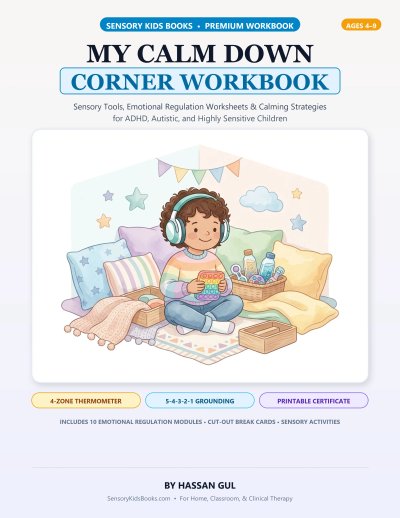
My Calm Down Corner Workbook
Sensory Tools, Emotional Regulation Worksheets & Calming Strategies for ADHD, Autistic, & Sensitive Kids (Ages 4–9)
Quick Answers for Parents & Educators
📚 Evidence-Based Sources & Citations
Peer-reviewed literature, clinical frameworks, and foundational neurodiversity resources referenced in this guide.
- Occupational Therapy Practice Framework: Domain and Process (4th Edition) — American Occupational Therapy Association (AOTA)(2020)View Sourceopen_in_new
- The Polyvagal Theory: Neurophysiological Foundations of Emotions, Attachment, Communication, and Self-Regulation — Dr. Stephen W. Porges, PhD(2011)View Sourceopen_in_new
- Understanding Pathological Demand Avoidance (PDA): Identifying Needs & Low-Demand Approaches — PDA Society UK(2023)View Sourceopen_in_new
- Sensory Processing Issues Explained: Supporting Children with Sensory Sensitivities — Child Mind Institute(2024)View Sourceopen_in_new
Join the Conversation
Get our monthly guide on sensory-aware parenting and neuro-inclusive home design delivered straight to your sanctuary.
Respecting your inbox and your peace of mind.
Leave a Reply
Your email address will not be published. Required fields are marked *