Grocery Shopping with Autistic Kids: Surviving Sensory Overload in Public
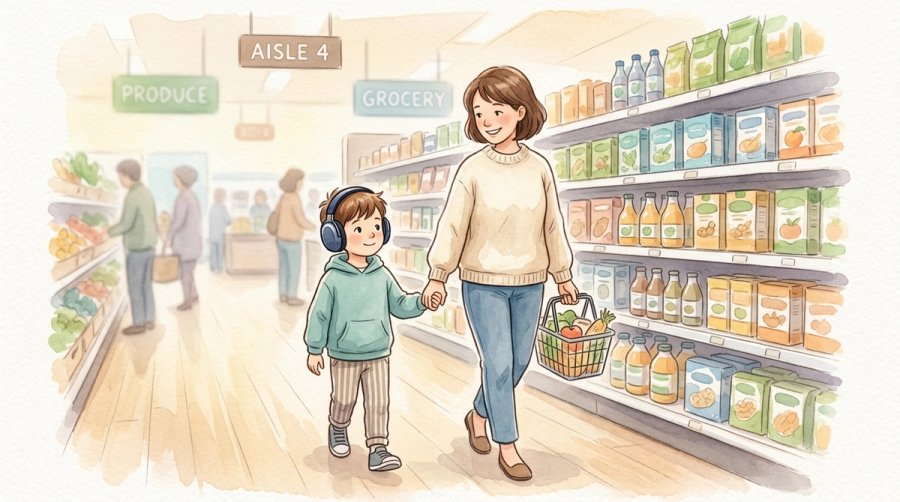
Supermarkets are sensory minefields. Here is the neuroscience behind why grocery stores trigger autistic meltdowns—and the 4-phase tactical protocol to turn chaotic trips into calm family missions.
To most neurotypical adults, a Sunday trip to the grocery store is just a routine errand. But to an autistic child, a modern supermarket is an intense, multi-sensory obstacle course designed to overwhelm every single sensory receptor simultaneously.
As an autistic adult and parent, I can still remember walking into supermarkets as a child and feeling like my brain was being physically assaulted. The relentless 60-cycle buzz of massive overhead fluorescent tubes, the screech of metal shopping cart wheels, the cacophony of barcode scanners beeping at eight different registers, the sudden roar of the public intercom, and the overwhelming clash of chemical scents in the cleaning aisle—it felt like standing inside the engine room of a cargo ship.
And then comes the moment every special needs parent dreads: Aisle 4. Your child stops walking, their face turns bright red, their hands clamp over their ears, and they drop to the polished linoleum floor, screaming and thrashing.
Suddenly, strangers are staring. Some shake their heads in disapproval. Others whisper about 'undisciplined children' and 'bad parenting.'
Here is what the judgmental onlookers don't understand: That explosion in Aisle 4 is not bad behavior. It is not a spoiled child throwing a tantrum for candy. It is a terrified human nervous system experiencing total neurological failure due to sensory flooding.
In this comprehensive survival guide, we will unpack the neuroscience of sensory overload in public spaces, explain the critical difference between a tantrum and a meltdown, and provide our tested 4-phase protocol to transform grocery trips from a nightmare into a calm, predictable family experience.
The Neuroscience of Sensory Gating: Why Supermarkets Overload the Autistic Brain
In a neurotypical brain, the thalamus acts as an automated sensory bouncer. It filters out irrelevant background data—the hum of the air conditioner, the chatter three aisles over, the glare of the lights—allowing the conscious brain to focus solely on finding peanut butter.
In autistic brains, research shows that this neurological filter—known as **sensory gating**—functions very differently. Rather than attenuating background noise, the autistic nervous system processes almost all environmental stimuli at equal volume.
- 💡 Visual Hyper-Arousal: Commercial fluorescent lighting flickers at frequencies invisible to neurotypical eyes but perceived by autistic visual systems as a strobe light, triggering headaches and ocular fatigue.
- 🔊 Auditory Cacophony: Carts rattling, automated door chimes, ice machines groaning, and dozens of human voices produce an overwhelming wall of sound that scrambles working memory.
- 👃 Olfactory Saturation: Walking from the floral department into the hot rotisserie chicken counter and then into the bleach-heavy detergent aisle triggers extreme nausea in scent-sensitive children.
- 👥 Unpredictable Crowds & Spatial Chaos: Strangers brushing past shopping carts, kids darting into aisles, and crowded checkout lanes trigger intense personal boundary anxiety and fight-or-flight defensiveness.
When that sensory bucket fills to the absolute brim, the brain's survival mechanism activates. The autonomic nervous system floods the bloodstream with adrenaline and cortisol, triggering an involuntary meltdown.
Tantrum vs. Sensory Meltdown: How to Tell the Difference in Public
Understanding whether your child is experiencing a behavioral tantrum or a neurological meltdown dictates your entire response:
The Behavioral Tantrum (Goal-Oriented)
- 🎯 The Purpose: The child wants a specific outcome (e.g., 'Buy me that chocolate bar right now!').
- 👀 Social Checking: The child watches the adult's reaction to gauge if their screaming is working.
- 🛑 The Resolution: The behavior stops immediately the moment they get what they want or realize it won't work.
The Sensory Meltdown (Involuntary Neurological Flood)
- ⚡ The Purpose: There is zero goal. It is an involuntary physical release of unbearable sensory pain and panic.
- 🙈 No Social Checking: The child does not care who is watching. They may close their eyes, scream, bite their hands, or thrash wildly.
- ⏳ The Resolution: Giving them candy or toys does nothing. The meltdown only subsides when sensory inputs are removed and their nervous system slowly returns to baseline.
If your child is in a meltdown, reasoning, negotiating, or threatening punishment ('We are leaving right now and you're losing your iPad!') will only intensify their fight-or-flight panic. Demands must immediately drop to zero.
The 4-Phase Protocol for Surviving Grocery Shopping with Autistic Kids
We treat shopping as a structured mission. Here is our 4-phase tactical blueprint:
Phase 1: Pre-Trip Preparation & Predictability
Predictability is the ultimate antidote to anxiety. An autistic brain expends massive energy trying to predict what will happen next. If they don't know the plan, anxiety skyrockets.
- 📖 Read Social Stories: Before leaving the house, read a social story about what the grocery store looks like, sounds like, and what the sequence of events will be.
- 📋 Build a Visual Shopping List: Print or draw 5 to 6 items your child is responsible for spotting (e.g., apples, milk, bread, cereal). Give them a clipboard with a pencil or dry-erase marker.
- ⏰ Pick the Off-Peak Window: Never take a sensory-sensitive child shopping on Saturday at 1:00 PM or Sunday at 4:00 PM. Shop early on weekday mornings (8:00 AM) or late evenings when crowds and noise are minimal.
Phase 2: Sensory Armor & Tactical Gear
Never walk into a supermarket without defensive sensory tools packed and ready in your vehicle:
- 🎧 Active Noise-Canceling Earmuffs: Dampens harsh store acoustics and sudden intercom announcements by 25 to 30 decibels.
- 🕶️ Polarized Tinted Sunglasses: Softens the harsh glare of commercial fluorescent lighting and prevents ocular headaches.
- 💎 Sensory Chewelry: Provides a safe oral-motor outlet so your child doesn't chew on cart handles or their clothing collars.
- 🧥 Weighted Hoodie or Compression Shirt: Provides steady, calming Deep Touch Pressure across the torso during transitions.
Phase 3: The 'Proprioceptive Job' (Heavy Work on the Go)
Passive sitting in a shopping cart invites boredom and hyper-awareness of sensory triggers. Instead, engage their proprioceptive system with physical 'heavy work':
- 🛒 Pushing the Cart: Let your child push the mini kid-cart or help you push the heavy adult cart. The physical resistance sends calming joint feedback to the brain.
- 🧺 Basket Carrier: Have them carry a handheld basket containing 2 or 3 heavy canned items.
- 🕵️ The Grocery Detective: Keep them actively engaged in their visual list: 'Can you spot the green box of tea on this shelf?'
Phase 4: The Strategic Exit & Recovery Protocol
Always establish an escape plan before entering the store:
- 🚪 Prioritize Regulation Over groceries: If your child's fists clench, breathing turns rapid, and they hit the Yellow Zone, do not force them through three more aisles. Leave the cart with customer service or abandon it. Your child's nervous system is worth infinitely more than a carton of eggs.
- 🚗 The Car Decompression Chamber: Have a quiet, dim recovery setup waiting in the car: a cold water bottle, their favorite soothing music or audiobook, and a soft blanket. Allow 10 minutes of quiet before driving home.
Essential Sensory Tools for Public Outings & Shopping Trips
Here are the four field-tested tools we keep in our travel bag for every public outing:
1. Alpine Muffy Kids Noise-Canceling Earmuffs
Industry-leading sound attenuation engineered specifically for children's heads. Soft, padded headband with zero painful pressure points.
shopping_cartCheck Price on Amazon: Alpine Muffy Kids Noise Canceling Earmuffsopen_in_new
2. Kids Polarized UV400 Anti-Glare Sunglasses
Durable, flexible rubber frames that won't break if dropped. Essential for dampening fluorescent grocery store light glare.
shopping_cartCheck Price on Amazon: Kids Polarized Sunglasses (Anti-Glare)open_in_new
3. Visual Shopping Checklist Board (Dry Erase / Velcro)
A portable visual schedule board that keeps children focused on a predictable, gamified scavenger hunt rather than environmental stress.
shopping_cartCheck Price on Amazon: Portable Visual Schedule Checklist Boardopen_in_new
4. Medical-Grade Sensory Chew Necklace
BPA-free silicone chew pendants that give children an immediate, discrete oral-motor calming tool when public anxiety rises.
shopping_cartCheck Price on Amazon: Sensory Chew Necklace for Kidsopen_in_new
Prepare Your Child with 'Leo Goes to the Grocery Store'
To help children visualize grocery shopping before they ever set foot in a store, we published our illustrated children's storybook:
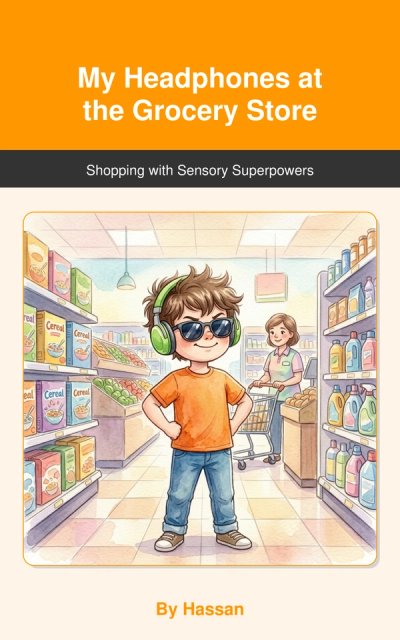
📖 Leo Goes to the Grocery Store by Hassan Gul. Follow Leo as he navigates the sounds, smells, and bright lights of the supermarket using his noise-canceling headphones, visual list, and sensory superpowers.
📥 For a complete visual routine toolkit, also download our Free 5-Page Self-Regulation Starter Kit (Instant PDF) to practice tactile breathing and feelings check-ins before leaving the house.
 Instant PDF
Leo Grocery Store
A Sensory-Friendly Story About Grocery Shopping, Overwhelm, and Self-Regulation Tools
Quick Answers for Parents & Educators
Recommended Sensory Products
Carefully curated products for a sensory-friendly environment.
Alpine Muffy Kids Noise Canceling Earmuffs
Auditory Protection
Comfortable, high-attenuation hearing protection designed to dampen harsh store acoustics and announcements.
Kids Polarized Flexible Sunglasses
Fluorescent Glare Shield
Shatterproof flexible sunglasses that block harsh fluorescent supermarket lighting and prevent sensory headaches.
Portable Visual Schedule Checklist Board
Task Focus & Scavenger Hunt
Dry-erase visual checklist that turns grocery shopping into an engaging, predictable mission.
Sensory Chewelry Necklace
Oral Motor Calming
Durable medical-grade silicone chew pendant that provides calming oral proprioceptive input during public outings.
Join the Conversation
Get our monthly guide on sensory-aware parenting and neuro-inclusive home design delivered straight to your sanctuary.
Respecting your inbox and your peace of mind.
Discussion (0)
No comments yet. Be the first to share your thoughts!
Leave a Reply
Your email address will not be published. Required fields are marked *