How to Teach Growth Mindset to Autistic & ADHD Girls (Overcoming Perfectionism Paralysis)
Tearing up homework over a tiny eraser smudge? It is not drama—it is perfectionism paralysis. Here is how to build genuine resilience in neurodivergent girls.
She is sitting at the dining room table with her homework. She writes one math problem, makes a small smudge with her eraser, and suddenly, the world falls apart.
She tears the page in half, throws her pencil across the room, and buries her face in her arms, sobbing: 'I'm stupid! I ruin everything! I can't do anything right!'
Parents often try to soothe them with standard positive psychology: 'Honey, it is okay to make mistakes! Mistakes are just learning opportunities! Remember growth mindset?'
And what happens? The child screams louder. Why? Because to a neurodivergent girl battling Rejection Sensitive Dysphoria (RSD), a mistake is NOT a learning opportunity. It feels like an existential proof that she is broken, unworthy, and unlovable.
Autistic and ADHD girls are diagnosed years—often decades—later than boys because they master the art of autistic masking early. But that high-masking social survival comes at an agonizing psychological cost: severe, debilitating **Perfectionism Paralysis**.
In this clinical and parenting guide, we will unpack why traditional 'growth mindset' platitudes fail neurodivergent girls, explore the neurobiology of RSD, and provide a somatic, low-demand framework to build genuine, unbreakable resilience.
The Gender Trap: Why Neurodivergent Girls Suffer from Perfectionism
Society socializes young girls to be polite, quiet, accommodating, and socially attuned. When a young girl has ADHD or Autism, she quickly realizes that her natural neurodivergent impulses—hyperactivity, blunt honesty, sensory meltdowns—are met with social disapproval.
To survive, she builds an elaborate internal masking defense:
- 🎭 The 'Good Girl' Mask: She forces herself to sit still, suppresses stims, smiles constantly, and hyper-vigilantly copies the behavior of popular neurotypical peers.
- 💔 Rejection Sensitive Dysphoria (RSD): Her nervous system registers constructive feedback, mild criticism, or personal error as acute physical agony, stimulating the same pain pathways in the brain as a broken bone.
- 🧊 Perfectionism as a Shield: She concludes subconsciously: 'If I am 100% perfect—if I get straight A's, if my handwriting is flawless, if I never make a mistake—nobody will find out that I am broken, and nobody can reject me.'
The moment perfection slips (a crooked line, a B+ on a quiz, a minor reprimand from a teacher), her protective shield shatters. The brain plunges into panic, resulting in catastrophic perfectionism paralysis.
Why Carol Dweck's Growth Mindset Fails Neurodivergent Minds
Dr. Carol Dweck's famous growth mindset research works wonderfully for neurotypical brains with secure social belonging. But for an autistic or ADHD girl, telling her 'Just try harder! Failure is just feedback!' backfires because:
- ❌ It Ignores Cognitive & Sensory Fatigue: She is already expending 300% more neurological energy than her peers just to mask and sit through the school day. Telling her to 'try harder' pushes her into autistic burnout.
- ❌ It Minimizes Real Rejection: Neurodivergent girls have experienced real social rejection from peers who sense they are 'different.' Their fear is not irrational; it is based on lived social trauma.
- ❌ It Treats an Emotional Flood with Logic: When a girl is sobbing over a torn paper, her amygdala is in fight-or-flight. Preaching mindset theory during an emotional flood is useless.
The 4-Step Somatic Framework for Genuine Resilience
How do we teach resilience to girls who fear failure? Here is our tested protocol:
- ✏️ 1. Provide 'Wipe-Clean' Forgiving Mediums: Never force a perfectionistic girl to start on permanent paper. Use erasable Rocketbook notebooks, dry-erase whiteboards, or digital tablets. When a mistake can be erased with a damp cloth in 1 second, the activation terror vanishes.
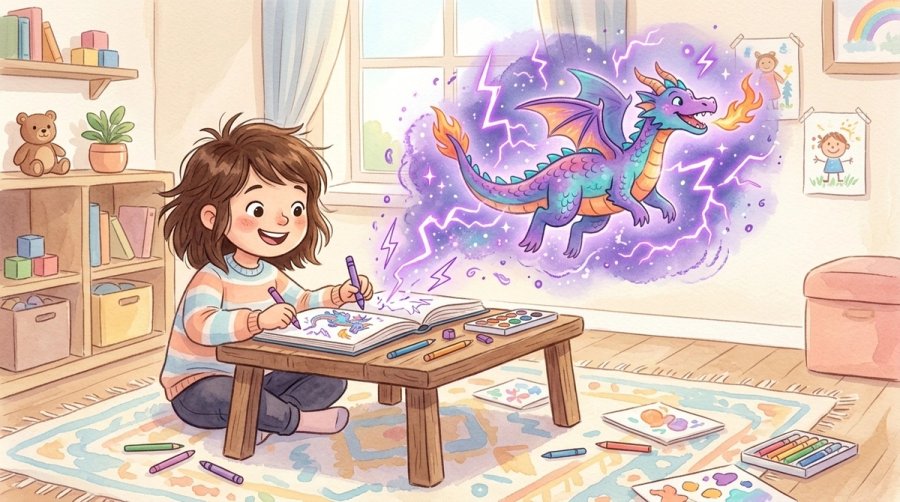
- 🎨 2. Celebrate 'Intentionally Bad' Art Sessions: Set a timer for 5 minutes and announce: 'We are going to draw the ugliest, silliest, most ridiculous monster we can possibly make!' When the goal is to make something deliberately messy, the perfectionism circuit is completely disarmed.
- 🤝 3. Validate the Pain Before Offering Perspective: Never say 'It's no big deal.' Say: 'I see how much that hurts. Your brain was working so hard on that, and it feels awful when it doesn't match the picture in your head. I am right here.'
- 🌱 4. Shift to Self-Compassion over Growth Mindset: Teach Dr. Kristin Neff's self-compassion framework: 'You don't have to be perfect to deserve love. You are allowed to be a human being having a hard day.'
Recommended Tools to Ease Perfectionism & Build Resilience
Equip your daughter with sensory tools that build emotional safety:
1. Wipe-Clean Dry-Erase Activity Workbooks
Glossy reusable workbooks with dry-erase markers that allow infinite resets with zero paper waste or erasing tears.
shopping_cartCheck Price on Amazon: Wipe Clean Learning Workbooks for Kidsopen_in_new
2. Daily Positive Affirmation Cards for Neurodivergent Girls
Empowering, neurodiversity-affirming affirmation cards that validate big emotions, sensory boundaries, and unique brains.
shopping_cartCheck Price on Amazon: Positive Affirmation Cards for Girlsopen_in_new
3. Somatic Mindful Breathing Necklace
A discreet stainless steel flute pendant that extends exhalations to 8 seconds, activating the vagus nerve during homework panic.
shopping_cartCheck Price on Amazon: Mindful Breathing Necklace for Anxietyopen_in_new
4. Sensory Glitter Calming Wand
A mesmerizing visual sensory focal tool that helps slow rapid eye movements and reset an anxious nervous system during crying spells.
shopping_cartCheck Price on Amazon: Sensory Glitter Calming Wand for Kidsopen_in_new
Explore Growth Mindset & Resilience Stories for Girls
To help neurodivergent girls see their sensitivity, creativity, and intense focus as superpowers, explore our published resource:
📖 Growth Mindset & Resilience Stories for Neurodivergent Girls by Hassan Gul. A collection of inspiring stories featuring autistic and ADHD heroines overcoming masking, perfectionism, and self-doubt.
📥 Also download our Free 5-Page Self-Regulation Starter Kit (PDF) for tactile box breathing cards and feelings thermometers.
Growth Mindset & Resilience Stories for Neurodivergent Girls
Inspiring Tales & Visual Worksheets to Build Confidence, Overcome Perfectionism, and Embrace the Power of Yet for ADHD, Autistic, & Sensitive Girls (Ages 7–12)
Quick Answers for Parents & Educators
Recommended Sensory Products
Carefully curated products for a sensory-friendly environment.
Wipe Clean Learning Workbooks for Kids
Zero-Shame Medium
Erasable glossy practice sheets that eliminate perfectionism tears by allowing instant, frictionless redos.
Positive Affirmation Cards for Girls
RSD Defense
Daily affirming flashcards that build authentic self-worth and counteract autistic masking burnout.
Mindful Breathing Anxiety Necklace
Vagus Nerve Resetter
Discreet stainless steel breathing tube that lengthens exhalations to quickly lower elevated heart rate.
Sensory Glitter Calming Wand
Visual Calming Anchor
Slow-swirling glitter tube that provides an effortless visual anchor during tearful emotional spirals.
Join the Conversation
Get our monthly guide on sensory-aware parenting and neuro-inclusive home design delivered straight to your sanctuary.
Respecting your inbox and your peace of mind.
Discussion (0)
No comments yet. Be the first to share your thoughts!
Leave a Reply
Your email address will not be published. Required fields are marked *