Interoception Explained: Why Neurodivergent Kids Ignore Hunger, Thirst & Bathroom Signals

Dancing from foot to foot but swears they don't need to pee? It is not defiance—it is interoceptive blindness. Here is the neuroscience behind why neurodivergent kids ignore body signals.
It is 3:00 PM. Your 8-year-old child hasn't used the bathroom all day. Suddenly, they are dancing frantically from foot to foot, clutching themselves in panic, and before they can make it down the hall, an accident happens.
Or maybe it is dinner time: your child swore they 'weren't hungry at all' at 5:30 PM, but by 6:15 PM, they are screaming on the kitchen floor in an explosive, trembling meltdown over a dropped fork—because their blood sugar crashed into the basement.
Parents often ask in despair: 'How can an intelligent child not know they need to pee? How can they ignore a rumbling stomach until they explode?'
Here is the medical answer: They are not ignoring their body. They literally cannot feel it.
Beyond the five external senses (sight, sound, smell, taste, touch), our nervous system relies on an internal sensory network called **Interoception**—the 8th sensory system. When interoceptive signaling fails, the brain is completely blind to internal physiological signals. In this clinical and practical guide, we will unpack the neuroscience of interoception, explore its profound connection to autism and ADHD, and provide occupational therapy strategies to help your child become a 'Body Detective.'
What Is Interoception? The Brain's Internal Dashboard
Coined by British neurophysiologist Sir Charles Sherrington, interoception refers to the receptor network located throughout our internal organs, muscles, skin, and vascular system that reports the body's internal physiological status back to the **insular cortex** of the brain.
Interoception tells you:
- 🚽 Bladder & Bowel Fullness: The stretch receptors in the bladder wall signaling that it is time to use the restroom.
- 🥪 Hunger & Satiety: Stomach contractions, ghrelin/leptin hormone shifts, and blood glucose fluctuations signaling when to eat and when to stop.
- 💧 Thirst & Dehydration: Dryness in the mucosal lining of the mouth and plasma osmolality signaling the need for water.
- 💓 Heart Rate & Respiration: Sensing a pounding pulse or shallow chest breathing during anxiety.
- 🌡️ Internal Temperature: Feeling uncomfortably hot or freezing cold and prompting you to remove a jacket.
The Two Interoceptive Pitfalls in Autism & ADHD
Just like with sound or light, neurodivergent children can experience interoceptive differences in two distinct directions:
1. Hypo-Reactive Interoception (The 'Muted' Dashboard)
The internal sensory signals are muffled or delayed. The child does not feel bladder pressure until the bladder is at 99% capacity. They do not register hunger until hypoglycemia triggers a full-blown autonomic 'hangry' meltdown. They can play outside in 30°F snow in a t-shirt without shivering.
2. Hyper-Reactive Interoception (The 'Siren' Dashboard)
Normal, harmless bodily sensations are amplified into terrifying threats. A normal bowel movement feels like an agonizing knife; a slight heartbeat acceleration during mild excitement registers as a heart attack, triggering panic attacks.
The Critical Link Between Interoception and Emotional Regulation
Pioneering occupational therapist **Kelly Mahler** discovered that interoception is the bedrock of emotional regulation. Every human emotion begins as a physical bodily sensation:
- 😡 Anger: Feels like clenched fists, heat in the face, and tight jaw muscles.
- 😨 Fear / Anxiety: Feels like a fluttery, hollow stomach, cold hands, and racing pulse.
- 😔 Sadness: Feels like heavy limbs, burning eyes, and a lump in the throat.
If a child cannot feel their body sensations (poor interoception), they cannot name their feelings (alexithymia). They cannot intervene in the Yellow Zone because they don't know they are escalating until their nervous system detonates in the Red Zone.
The 4-Step 'Body Detective' Protocol to Train Interoception
You cannot bribe or punish a child into better interoception. You must retrain the insular cortex through somatic scaffolding:
- 🕵️ 1. Focus on Body Clues (Not Emotion Labels): Stop asking 'How do you feel?' Instead, ask concrete physical detective questions: 'Put your hand on your chest. Is your heart beating like a cheetah or like a turtle?' 'Is your tummy empty like an empty backpack?'
- ⏰ 2. Externalize Internal Schedules: If the internal alarm doesn't work, provide an external one. Set a gentle vibrating reminder watch every 2 hours: 'This is our Body Check interval. Let's try sitting on the toilet for 60 seconds and drink 3 big gulps of water.'
- 🧊 3. Somatic Contrasting Exercises: Help the brain calibrate sensations through contrast: Hold an ice cube in one hand and a warm washcloth in the other. Ask: 'What does cold feel like? What does warm feel like?' Squeeze your muscles into tight rocks for 5 seconds, then melt into butter.
- 🍎 4. Proactive Scheduled Fueling: Never wait for an ADHD/autistic child to ask for food. ADHD medications often suppress appetite signals entirely. Serve nutrient-dense, protein-rich snacks at predictable 3-hour intervals regardless of whether they feel hungry.
Recommended Tools for Interoceptive Support
Equip your child with reliable external body scaffolding:
1. WobL Vibrating Waterproof Potty & Hydration Watch
A discreet digital wristwatch that vibrates silently at set intervals throughout the school day to cue bathroom and water breaks without teacher embarrassment.
shopping_cartCheck Price on Amazon: WobL Vibrating Reminder Watch for Kidsopen_in_new
2. Motivational Hourly Time-Marker Straw Water Bottle (32oz)
Visual hourly timeline on the bottle that shows exactly where the water line should be, turning hydration into an effortless visual checklist.
shopping_cartCheck Price on Amazon: Motivational Time Marker Water Bottle for Kidsopen_in_new
3. Kelly Mahler's Interoception Body Sensation Flashcards
Clinical occupational therapy flashcards that help children connect internal physical clues (muscles, breath, stomach) with emotional states.
shopping_cartCheck Price on Amazon: Interoception Body Sensation Cards for Kidsopen_in_new
4. Dual-Temperature Cold & Warm Sensory Gel Packs
Flexible gel packs for practicing somatic contrasting exercises to help sensory-seeking and hypo-reactive nervous systems tune into temperature.
shopping_cartCheck Price on Amazon: Reusable Hot and Cold Gel Packs for Kidsopen_in_new
Explore 'Body Detective' (Book 7)
To help children learn how to listen to their body's secret internal clues through an empowering storybook, explore our published resource:
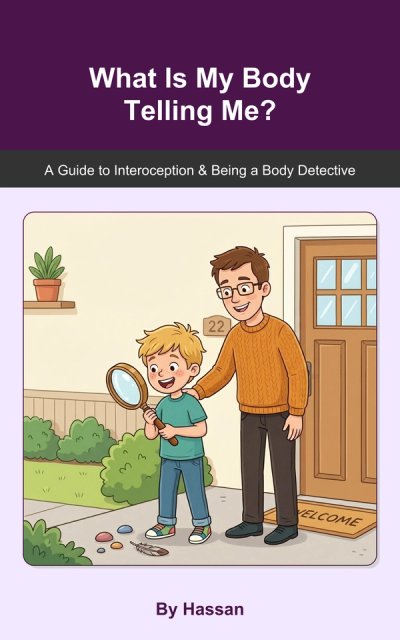
📖 Body Detective (Book 7) by Hassan Gul. Follow our young hero as they learn to listen to their stomach rumbles, heart beats, and bladder clues to become a master Body Detective.
📥 Download our Free 5-Page Self-Regulation Starter Kit (PDF) for tactile interoception body check-in charts.
 Instant PDF
Body Detective
A Sensory-Friendly Guide to Interoception and Understanding Body Cues for Autistic Kids
Quick Answers for Parents & Educators
Recommended Sensory Products
Carefully curated products for a sensory-friendly environment.
WobL Vibrating Reminder Watch for Kids
External Interoception Alarm
Discreet vibrating interval watch that reminds kids to use the bathroom and drink water without public embarrassment.
Motivational Time Marker Water Bottle
Visual Hydration Anchor
Clear hourly visual markers that show kids exactly how much water to drink to prevent hidden dehydration headaches.
Interoception Body Sensation Cards
Somatic Education Deck
Occupational therapy prompt cards that build insular cortex awareness by mapping internal physical sensations.
Reusable Hot and Cold Gel Packs for Kids
Somatic Calibration Tool
Safe temperature tools for home contrasting exercises to wake up muted internal temperature sensors.
Join the Conversation
Get our monthly guide on sensory-aware parenting and neuro-inclusive home design delivered straight to your sanctuary.
Respecting your inbox and your peace of mind.
Discussion (0)
No comments yet. Be the first to share your thoughts!
Leave a Reply
Your email address will not be published. Required fields are marked *