Pediatric POTS & Dysautonomia: How to Spot the Signs & Track Symptoms in Teens

Dizzy every time they stand? It is not anxiety—it may be POTS. Here is the medical guide to pediatric dysautonomia, home lean testing, and evidence-based management.
It usually begins in early adolescence. Your previously active teenager suddenly struggles to get out of bed in the morning. They complain of dizzy spells every time they stand up. Their heart pounds like a jackhammer in their chest while brushing their teeth. They suffer from brain fog so thick they can barely read two paragraphs of a textbook.
You take them to a pediatrician, and after a 10-minute checkup with clean bloodwork, you are told: 'Your teen has school avoidance, depression, or generalized anxiety. They just need therapy.'
Months pass, and the symptoms worsen. Hot showers cause near-fainting episodes. Their feet turn a dark purplish-red when standing. Exercise produces debilitating fatigue that leaves them bedbound for days.
Here is the medical reality that thousands of pediatricians miss: Your teenager is not anxious. They are suffering from a physical autonomic nervous system disorder known as **Postural Orthostatic Tachycardia Syndrome (POTS)**.
As an advocate working with neurodivergent families and someone intimately familiar with dysautonomia, I have seen too many teenagers gaslit by doctors who fail to recognize this neurological condition. In this comprehensive medical guide, we will unpack the physiological mechanics of pediatric POTS, examine its massive comorbidity with Autism, ADHD, and Ehlers-Danlos Syndrome, and provide our daily symptom-tracking protocol to get your teen properly diagnosed and supported.
What Is POTS? The Autonomic Blood Flow Failure
POTS is a form of **Dysautonomia**—a dysfunction of the autonomic nervous system, which controls involuntary bodily functions like heart rate, blood pressure, digestion, and temperature regulation.
In a healthy body, when you transition from lying down to standing, gravity pulls blood toward your legs and abdomen. The autonomic nervous system instantly tightens blood vessels in the lower body and releases adrenaline to pump blood back up against gravity to the brain.
In a teen with POTS, that automated vasoconstriction fails. Blood pools heavily in the legs and viscera. Starved of oxygenated blood, the brain panics. The heart compensates by beating violently fast—spiking by **30 to 40+ beats per minute** within 10 minutes of standing—in a desperate attempt to force blood back to the head.
The 'Neurodivergent Trifecta': Autism, ADHD, EDS & POTS
POTS does not exist in a vacuum. Recent clinical research has identified a profound genetic and physiological clustering known as the **Neurodivergent Trifecta**:
- 🧬 Hypermobile Ehlers-Danlos Syndrome (hEDS): A connective tissue disorder where collagen is abnormally stretchy. Veins are overly elastic, allowing blood to pool easily in the lower extremities, triggering orthostatic tachycardia.
- 🧠 Autism & ADHD: Over 40% of POTS and EDS patients are neurodivergent. Researchers hypothesize shared genetic connective tissue vulnerabilities and chronic autonomic nervous system dysregulation.
- 🛡️ Mast Cell Activation Syndrome (MCAS): Hyperactive immune cells that release histamine in response to heat, stress, or foods, dilating blood vessels and exacerbating POTS dizziness.
The 7 Hallmark Warning Signs of Pediatric POTS
If your teenager exhibits three or more of these symptoms, POTS must be clinically evaluated:
- 💓 Orthostatic Heart Rate Spike: Heart rate jumps by 30+ bpm (or exceeds 120 bpm) within 10 minutes of standing without a drop in blood pressure.
- 🌫️ Severe Cognitive 'Brain Fog': Slow processing speed, memory lapses, and inability to concentrate when upright, which miraculously clears when lying down.
- 🟣 Dependent Acrocyanosis (Blood Pooling): Feet and lower legs turning red, purple, or blotchy after standing or taking a warm shower.
- 🚿 Hot Shower Intolerance: Warm water dilates blood vessels, causing rapid dizziness, nausea, palpitations, and near-syncope.
- 💤 Post-Exertional Malaise & Chronic Fatigue: Crashing for 24 to 48 hours after minor physical activity or social outings.
- 🌡️ Temperature Dysregulation: Severe intolerance to heat or cold; excessive sweating or inability to sweat.
- 🤢 Gastrointestinal Dysmotility: Early satiety, chronic nausea, abdominal pain, or gastroparesis due to poor autonomic gut innervation.
The Home 'Poor Man's Tilt Table Test' (NASA 10-Minute Lean Test)
Before seeing a pediatric cardiologist, conduct this simple 15-minute test at home with a pulse oximeter:
- 1. Baseline Have your teen lie flat and completely relaxed on a bed for 5 minutes. Record resting heart rate and blood pressure.: undefined
- 2. Stand Up Have them stand up quietly against a wall without talking or moving their feet.: undefined
- 3. Record Every 2 Minutes Record heart rate and blood pressure at minute 2, minute 4, minute 6, minute 8, and minute 10.: undefined
- 4. Diagnostic Criteria In teens aged 12 to 19, a sustained increase of **40 beats per minute or more** (or a standing heart rate over 130 bpm) confirms POTS.: undefined
The 4 Core Management Pillars for Pediatric POTS
While POTS is chronic, it can be managed effectively with targeted lifestyle interventions:
- 🧂 1. High-Dose Electrolytes & Sodium: POTS patients require 3,000 to 5,000 mg of sodium daily and 3 to 4 liters of fluid to expand blood volume. Drinking plain water is not enough; sodium is mandatory to retain fluid in blood vessels.
- 🧦 2. Graduated Medical Compression Garments: Waist-high or thigh-high compression stockings (20-30 mmHg) physically squeeze pooled blood out of the lower body back toward the heart and brain.
- 🚴 3. Recumbent Physical Therapy (The Levine Protocol): Upright cardio (treadmills) triggers severe symptoms. Rebuild cardiovascular conditioning horizontally using rowing machines, recumbent bikes, or swimming.
- 🏫 4. School 504 Plan Accommodations: Mandate elevator access, hydration at desks, permission to sit with feet elevated, extended time on exams, and exemption from morning physical education.
Recommended Daily Management Tools for Teens with POTS
Equip your teen with the essential clinical tools for daily symptom control:
1. Liquid I.V. Hydration Multiplier Electrolyte Packets
Clinical-grade cellular transport technology that delivers rapid hydration and essential sodium directly into the bloodstream 2x faster than water alone.
shopping_cartCheck Price on Amazon: Liquid I.V. Hydration Multiplieropen_in_new
2. Graduated Medical Compression Socks (20-30 mmHg)
High-compression knee or thigh-high stockings that prevent blood pooling, reduce dizziness, and eliminate lower leg heaviness.
shopping_cartCheck Price on Amazon: Medical Compression Socks for Teens (20-30 mmHg)open_in_new
3. Medical Fingertip Pulse Oximeter & Heart Rate Monitor
Accurate, portable digital monitor for recording immediate heart rate spikes during home NASA lean tests and symptom flares.
shopping_cartCheck Price on Amazon: Fingertip Pulse Oximeter Heart Rate Monitoropen_in_new
4. 32oz Insulated Stainless Steel Water Bottle with Straw
Keeps electrolyte drinks ice cold all day. Built-in straw promotes continuous, high-volume hydration without neck strain.
shopping_cartCheck Price on Amazon: 32oz Insulated Water Bottle with Strawopen_in_new
Explore The Dysautonomia & POTS Daily Logbook
To help your teen track vitals, identify symptom triggers, and provide indisputable empirical data to cardiologists, explore our published resource:
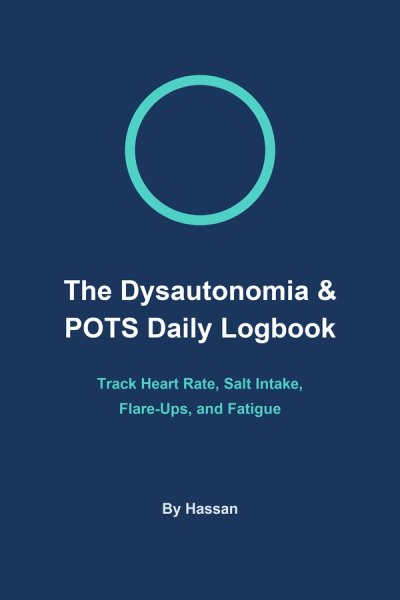
📖 The Dysautonomia & POTS Daily Logbook (Book 12) by Hassan Gul. Complete 90-day tracking layouts for heart rate, sodium/fluid intake, brain fog scales, and lean test records.
📥 Download our Free 5-Page Self-Regulation Starter Kit (PDF) for tactile calming mazes and feelings thermometers.
 Instant PDF
The Dysautonomia & POTS Daily Logbook
A Sensory-Friendly Health Tracker for Standing Heart Rate, Brain Fog, & Chronic Illness
Quick Answers for Parents & Educators
Recommended Sensory Products
Carefully curated products for a sensory-friendly environment.
Liquid I.V. Hydration Multiplier Electrolyte Packets
Rapid Blood Volume Expansion
Clinically balanced electrolyte drink mix providing the high-dose sodium needed to expand plasma volume in POTS.
Graduated Compression Socks (20-30 mmHg)
Blood Pooling Defense
Medical-grade compression stockings that physically force pooled blood back up to the heart and brain.
Fingertip Pulse Oximeter & Heart Rate Monitor
Vital Signs Tracking
Fast, accurate digital pulse oximeter for tracking orthostatic heart rate spikes during home lean tests.
32oz Insulated Stainless Steel Straw Water Bottle
Daily Hydration Anchor
Keeps high-sodium electrolyte water ice-cold for 24 hours to support mandatory 3L daily fluid goals.
Join the Conversation
Get our monthly guide on sensory-aware parenting and neuro-inclusive home design delivered straight to your sanctuary.
Respecting your inbox and your peace of mind.
Discussion (0)
No comments yet. Be the first to share your thoughts!
Leave a Reply
Your email address will not be published. Required fields are marked *