Rejection Sensitive Dysphoria (RSD) in ADHD & Autism: A Parent's Guide

If a mild correction triggers an explosive meltdown or a spiral of self-hatred, you might be looking at Rejection Sensitive Dysphoria (RSD). Learn how to spot and support RSD in ADHD and Autistic children.
You’re standing in the kitchen, and you gently remind your child to put their shoes by the door instead of leaving them in the middle of the hallway. It’s a standard, mundane request. You aren’t yelling. You aren’t even annoyed.
But instantly, the atmosphere in the room shatters.
Your child’s face crumples. They scream, "You hate everything I do! I never do anything right!" Or perhaps they completely shut down, running to their room, slamming the door, and refusing to speak for the rest of the evening.
As a parent, you’re left standing there with emotional whiplash. You think, "Where did that come from? It was just a pair of shoes."
I’ve been on both sides of this equation—as a neurodivergent individual who has felt that crushing, suffocating wave of perceived rejection, and as an architect of systems trying to help families navigate these exact explosive moments. What you just witnessed wasn't a tantrum. It wasn't manipulation. It was likely a severe neurological spike known as Rejection Sensitive Dysphoria (RSD).
What Exactly is Rejection Sensitive Dysphoria (RSD)?
Rejection Sensitive Dysphoria is an extreme, often physically painful emotional reaction to the perception—real or imagined—of being rejected, criticized, or failing to meet the expectations of others.
While RSD is most commonly discussed alongside ADHD, it frequently co-occurs in Autism as well. The keyword here is dysphoria, a Greek word meaning "hard to bear." For a child with RSD, a slight correction feels like a catastrophic attack on their core identity.
The Neurological Reality
I always tell parents: RSD is not a behavioral choice. It is a rapid-fire response in the amygdala. When an ADHD or Autistic brain perceives criticism, the emotional regulation system essentially short-circuits. The child is flooded with adrenaline and cortisol. To their nervous system, someone saying "please fix this math problem" feels identical to "a tiger is attacking you."
How RSD Manifests: The Two Extremes
RSD usually presents in one of two ways, and it can flip between them rapidly:
1. Externalizing (The Explosion)
This looks like intense rage, defensiveness, or immediate blame shifting. The child is trying to deflect the unbearable pain of criticism by going on the offensive. (For more on the difference between tantrums and neurological overwhelm, check out our guide on Autistic Meltdowns vs Tantrums.)
2. Internalizing (The Implosion)
This is the sudden withdrawal, severe negative self-talk ("I am so stupid," "Everyone hates me"), and deep depression. It often leads to crippling perfectionism or people-pleasing, where the child exhausts themselves trying to perfectly anticipate your demands to avoid the pain of falling short. If this sounds familiar, it strongly overlaps with demand avoidance—I highly recommend reading about PDA (Pathological Demand Avoidance).
The Cycle of People-Pleasing and Burnout
One of the most heartbreaking consequences of unmanaged RSD is the emergence of masking and extreme people-pleasing. If every criticism feels like a fatal stab wound, the logical survival strategy is to become the "perfect" child who never rocks the boat.
I see this constantly. Kids will completely suppress their own sensory needs, hide their struggles, and bend over backward to keep their teachers and parents happy. The result? Severe neurodivergent burnout by the time they hit their teens.
Actionable De-Escalation Strategies for Parents
When your child is spiraling in an RSD episode, logic goes out the window. You cannot reason with a flooded amygdala. Here is what you need to do instead.
1. Validate Before You Clarify
Do not immediately say, "That’s not what I meant, you’re overreacting." This pours gasoline on the fire. Instead, validate the emotion they are experiencing. "I see that what I said hurt you. I love you, and you are safe with me." Anchor them in safety first.
2. Regulate the Sensory Environment
Emotional dysregulation is intimately tied to sensory processing. When RSD hits, lower the sensory demands immediately. Dim the lights, stop talking, and offer deep pressure therapy if they tolerate it. Weighted blankets are incredible for calming an activated nervous system.
3. Use "Feedback Sandwiches" (Carefully)
When you must provide correction, structure it to prevent the perception of a global failure. Preface the correction with a clear statement of their worth, deliver the specific, narrow feedback, and follow up with reassurance. E.g., "I love how hard you worked on this homework. We just need to fix this one line here. You’re doing great."
Sensory & Emotional Regulation Tools
Sometimes, reducing background noise and providing an outlet for nervous energy can significantly raise the threshold before an RSD spike occurs.
Conclusion: Building Emotional Resilience
Parenting a child with RSD is exhausting. It requires you to constantly police your tone, your phrasing, and your facial expressions. But remember: your child isn't doing this to manipulate you. They are experiencing a very real, neurological pain.
By shifting our perspective from "fixing bad behavior" to "supporting an overwhelmed nervous system," we build a bridge of trust. When your child knows that you will be their safe harbor—even when they are acting out their pain—that is when true emotional resilience begins.
Need More Support?
If your child struggles with task paralysis alongside emotional dysregulation, our premium tools are designed to help.
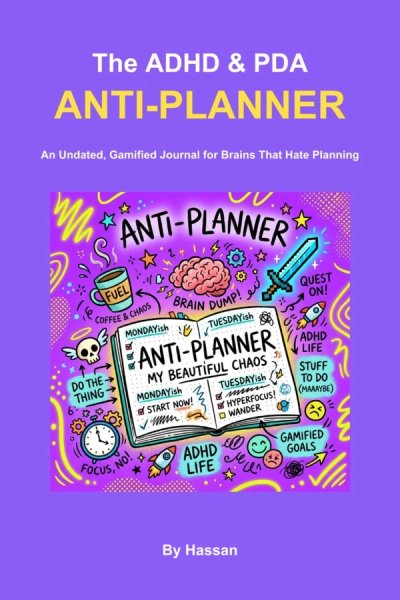
Check out The ADHD & PDA Anti-Planner to help them bypass demand avoidance, or explore the Emotion Monsters series to give them the visual vocabulary to express their overwhelming feelings before an RSD explosion happens.
You’ve got this. Keep advocating.
 Instant PDF
The Adhd And Pda Anti Planner
An Undated, Low-Demand Gamified Planner & Focus Journal for Neurodivergent Minds
Quick Answers for Parents & Educators
Recommended Sensory Products
Carefully curated products for a sensory-friendly environment.

Weighted Lap Pad
BEST FOR FOCUS
Providing 5lbs of gentle pressure to help children stay grounded during long reading sessions.

Dimmable Warm LED
SENSORY FRIENDLY
Flicker-free technology with adjustable color temperatures to prevent eye strain.
Join the Conversation
Get our monthly guide on sensory-aware parenting and neuro-inclusive home design delivered straight to your sanctuary.
Respecting your inbox and your peace of mind.
Discussion (0)
No comments yet. Be the first to share your thoughts!
Leave a Reply
Your email address will not be published. Required fields are marked *