The Best Books for an Autistic 5-Year-Old Dealing with Sensory Overload
Discover practical, neuro-affirming guidance, sensory regulation strategies, and lived-experience insights on The Best Books for an Autistic 5-Year-Old Dealing with Sensory Overload.
When my own child was five, stepping into a busy grocery store or a public restroom felt like walking onto a battlefield without armor. The fluorescent lights, the unpredictable sounds, the sheer volume of people—it was a recipe for instant, intense sensory overload.
As a parent and technical architect by day, I used to try to "fix" these moments with logic. I would explain that the hand dryer wasn't dangerous, or that the grocery store wouldn't hurt them. But I quickly learned that when an autistic 5-year-old is experiencing sensory overload, their nervous system is in full fight-or-flight mode. Logic simply doesn't compute.
What does work? Connection, validation, and preparation. And one of the most powerful tools in my parenting toolkit has been reading highly specific, neurodivergent-affirming books together. Here is my curated list of the best books for an autistic 5-year-old dealing with sensory overload.
Why Reading is the Ultimate Co-Regulation Tool
At five years old, a child’s receptive language is growing, but their ability to articulate complex internal sensations is still developing. They might not be able to say, "The frequency of that hum is causing me physical pain," but they can absolutely point to a character in a book and say, "I feel like him!"
Books provide a safe, detached third-party narrative. They give our children the vocabulary they need to understand their own bodies without feeling put on the spot.
1. For the Child Terrified of Loud Public Spaces
My Top Pick: The Bathroom That Was Too Loud
If your child covers their ears in terror the moment they see an automatic hand dryer or a loud public toilet flush, this is the book you need. I wrote The Bathroom That Was Too Loudspecifically because this was our biggest hurdle. It normalizes the fear of sudden, loud noises and introduces simple, actionable strategies—like wearing headphones or covering ears—so the child feels empowered rather than victimized by their environment.
2. For the Child Overwhelmed by Crowds and Visual Clutter
My Top Pick: My Headphones at the Grocery Store
The grocery store is a sensory nightmare for many autistic children. The bright lights, the competing music, the clanking of carts. My Headphones at the Grocery Store: Shopping with Sensory Superpowersreframes sensory tools (like noise-canceling headphones) not as a "special need," but as a superpower. When I read this with my kids, it changed how they viewed their sensory accommodations—it became cool to protect their peace.
3. For the Child Who Struggles with General Noise Sensitivity
My Top Pick: Leo's Quiet Center
Sometimes, it's not a specific place; it's just the general hum of a busy house or a loud classroom. Leo's Quiet Center: A Journey Through the Noiseis a beautiful, gentle story that helps children visualize finding a calm, quiet place inside themselves. It's an excellent bedtime read to help downregulate the nervous system after a loud day.
4. For the Child Who Masks at School and Melts Down at Home
My Top Pick: The Empty Battery
If your 5-year-old holds it together all day at kindergarten and completely falls apart the second they get into the car, they are experiencing after-school restraint collapse. The Empty Batteryuses the highly relatable metaphor of a draining battery to explain to children (and their parents) why they feel so exhausted and prone to meltdowns after masking their sensory needs all day.
How to Read These Books for Maximum Impact
1. Read them when your child is ALREADY calm. Do not try to read a book about meltdowns during a meltdown.
2. Pause and point to the illustrations. Ask declarative, low-demand questions like, "I notice his face looks a bit tight here," instead of "How do you think he feels?"
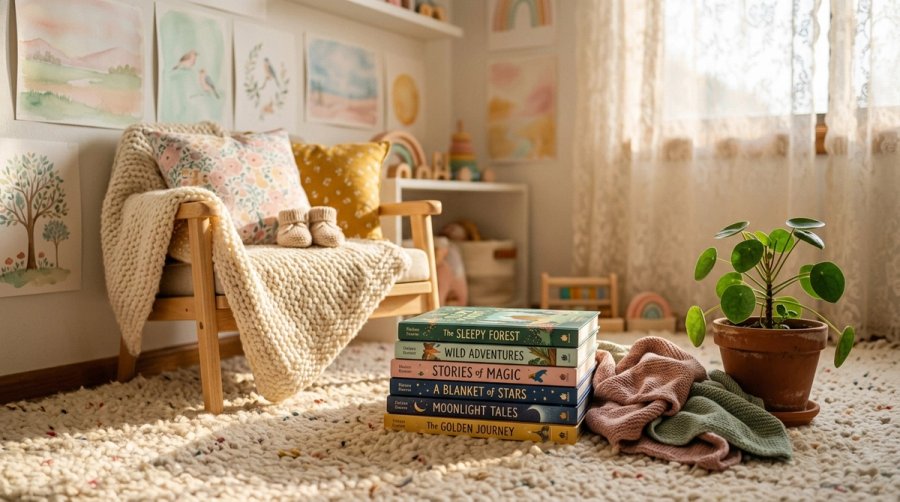
3. Keep them accessible. I recommend creating a small, cozy reading nook where your child can retreat independently when they feel the sensory overload creeping in.
If you want to explore more resources, check out our full collection of sensory-friendly digital eBooks and paperbacks in the shop. Building a library that reflects your child's unique neurotype is one of the most powerful ways to say, "I see you, and you make sense to me."
📖 Related reading: Learn How to Create a Calm Sensory Corner at Home on a Budget
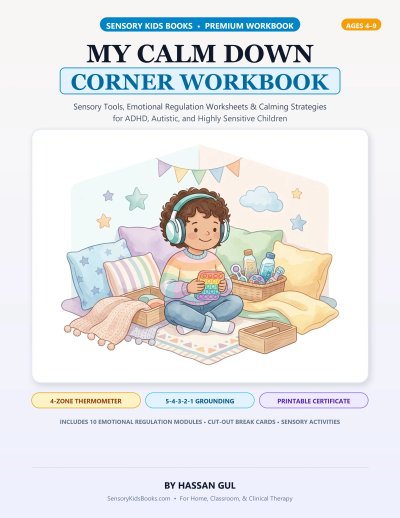 Instant PDF
My Calm Down Corner Workbook
Sensory Tools, Emotional Regulation Worksheets & Calming Strategies for ADHD, Autistic, & Sensitive Kids (Ages 4–9)
Quick Answers for Parents & Educators
Recommended Sensory Products
Carefully curated products for a sensory-friendly environment.

Weighted Lap Pad
BEST FOR FOCUS
Providing 5lbs of gentle pressure to help children stay grounded during long reading sessions.

Dimmable Warm LED
SENSORY FRIENDLY
Flicker-free technology with adjustable color temperatures to prevent eye strain.
Join the Conversation
Get our monthly guide on sensory-aware parenting and neuro-inclusive home design delivered straight to your sanctuary.
Respecting your inbox and your peace of mind.
Discussion (0)
No comments yet. Be the first to share your thoughts!
Leave a Reply
Your email address will not be published. Required fields are marked *