Vocal Stimming in ADHD & Autism: Why We Make Repetitive Sounds and How to Support Them

From unconscious humming and throat clearing to repeating movie lines and beatboxing, vocal stimming is an essential neurological engine. Discover why ADHD and autistic brains produce sound and how to support it without shame.
If you spent an hour observing me while I’m deep in concentration—architecting complex cloud databases or writing thousands of lines of code—you would notice something peculiar.
I don’t work in silence. Under my breath, I rhythmically hum a single four-bar bassline on loop. When a difficult logic problem blocks my flow, I click my tongue against the roof of my mouth or quietly repeat a punchy line of dialogue from a movie I watched three years ago.
For decades, neurodivergent people have been hushed, reprimanded, and scolded for these behaviors. In classrooms, teachers shout: "Quiet down, stop making noises!" At dinner tables, exasperated parents say: "Why can’t you just sit in peace?"
As both an autistic/ADHD adult and a systems thinker, I am here to tell you that vocal stimming is neither random nor defiant. It is a self-regulating operating system. When you force a neurodivergent brain to silence its vocal output, you are essentially pulling the power plug on its focus and emotional regulation.
What Exactly is Vocal Stimming?
Stimming (self-stimulatory behavior) is the repetitive performance of physical movements or vocalizations to regulate sensory input, express intense emotion, or maintain cognitive arousal. While motor stims involve hand flapping, rocking, or pacing, vocal stimming utilizes the vocal cords, throat, diaphragm, and mouth.
Vocal stims fall along a broad spectrum:
• Acoustic Vibrations: Low humming, whistling, buzzing lips ("raspberry sounds"), and rhythmic throat clearing.
• Percussive Mouth Sounds: Tongue clicking, cheek popping, teeth tapping, or vocal beatboxing.
• Linguistic Scripting (Echolalia): Repeating words with appealing phonetic textures ("crisp", "bubble"), quoting YouTube snippets, or reciting lines from favorite songs.
(If your child frequently repeats movie lines to communicate or self-soothe, be sure to read our deep dive on Delayed Echolalia and Scripting in Autism.)
The Neurological Divide: ADHD Dopamine Seeking vs. Autistic Sensory Gating
Though an ADHD hum and an Autistic hum may sound identical to an outside observer, their internal neurochemical engines are fundamentally different:
1. The ADHD Engine: Combating Understimulation
The ADHD prefrontal cortex suffers from baseline dopamine and norepinephrine deficits. When faced with an unstimulating or monotonous task (like math worksheets or cleaning a bedroom), an ADHD brain physically begins to power down into cognitive sleep. Vocal stimming generates internal acoustic and proprioceptive stimulation, delivering the micro-doses of dopamine required to keep the prefrontal cortex awake and engaged.
2. The Autistic Engine: Auditory Gating & Vagus Nerve Toning
In autistic individuals, the sensory filtering mechanism in the brainstem is often impaired, allowing chaotic ambient noise (fluorescent ballasts, air conditioning, distant chatter) to flood the nervous system. Humming creates a continuous, predictable internal frequency that effectively drowns out threatening unpredictable background sounds. Furthermore, the physical vibration of humming directly stimulates the auricular and pharyngeal branches of the Vagus Nerve, mechanically down-regulating the autonomic nervous system out of fight-or-flight.
The High Cost of Suppressing Vocal Stims
When parents, teachers, or therapists force a child to stop vocal stimming through scolding or behavioral conditioning, the underlying neurological need does not disappear. It merely gets bottled up inside.
Forced vocal suppression leads directly to masking fatigue. By 3:30 PM, a child who spent all day clamping their vocal cords shut in school will suffer severe sensory collapse at home, exploding into Autistic Meltdowns or complete emotional withdrawal.
When and How to Offer Gentle Sensory Substitutes
Let me be completely unambiguous: We never stop a stim simply because it looks or sounds unusual to neurotypical people.
However, intervention is warranted in two specific scenarios: (1) if the vocal stim is physically damaging the child’s throat (e.g., abrasive screeching causing vocal polyps), or (2) if it creates unbearable sensory distress for another family member in shared quarters. In those situations, we do not silence them—we provide an equivalent sensory input.
Sensory Tool 1: Oral Proprioception (Chewelry)
Chewing provides intense jaw proprioceptive input that satisfies the same trigeminal nerve pathways engaged during loud vocalizations.
Sensory Tool 2: Mindful Breathing Instruments
For children who crave the vibration of sound through their lips and palate, small acoustic breathing tubes provide quiet, calming resistance.
Sensory Tool 3: Acoustic Protection for Family Members
If a sibling or parent suffers from misophonia or sensory sound sensitivity, the compassionate answer is to protect the listener's ears rather than gag the stimmer.
Classroom Advocacy: How to Educate Teachers
When meeting with your child's IEP or 504 team, frame vocal stimming through the lens of executive function accommodation:
"When my child hums or whispers during independent seatwork, their brain is regulating its dopamine levels to maintain focus. If they are forced to dedicate 100% of their cognitive bandwidth to staying silent, they will have 0% bandwidth left to learn the academic material. Let's accommodate quiet humming or provide noise-canceling headphones to peers nearby."
Supporting Neurodivergent Independence
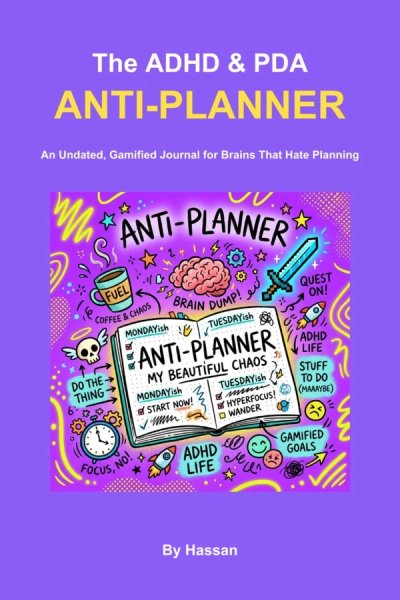
For actionable routines that reduce executive burnout and help children understand their unique nervous system, explore The ADHD & PDA Anti-Planner, and check out the Emotion Monsters Series to help young minds celebrate and articulate their sensory expressions.
 Instant PDF
The Adhd And Pda Anti Planner
An Undated, Low-Demand Gamified Planner & Focus Journal for Neurodivergent Minds
Quick Answers for Parents & Educators
Recommended Sensory Products
Carefully curated products for a sensory-friendly environment.

Weighted Lap Pad
BEST FOR FOCUS
Providing 5lbs of gentle pressure to help children stay grounded during long reading sessions.

Dimmable Warm LED
SENSORY FRIENDLY
Flicker-free technology with adjustable color temperatures to prevent eye strain.
Join the Conversation
Get our monthly guide on sensory-aware parenting and neuro-inclusive home design delivered straight to your sanctuary.
Respecting your inbox and your peace of mind.
Discussion (0)
No comments yet. Be the first to share your thoughts!
Leave a Reply
Your email address will not be published. Required fields are marked *